
Every year, thousands of stray and unwanted animals are euthanized in shelters across the United States. Many of these deaths are the avoidable result of owners failing to spay and neuter their pets. At Winslow Park Animal Hospital, we believe spaying and neutering are essential not only for controlling pet overpopulation but also for improving your pet’s health, behavior, and quality of life.
Health Benefits of Spaying and Neutering
Beyond preventing unwanted litters, spay and neuter procedures offer significant health advantages:
Reduction in Cancer Risk
- Females (Spaying): Spaying significantly reduces the risk of mammary gland tumors. It also prevents ovarian and uterine cancers.
- Males (Neutering): Neutering eliminates the risk of testicular cancer and reduces the risk of prostate problems.
Prevention of Infections
- Females: Spaying prevents pyometra, a potentially life-threatening infection of the uterus.
- Males: Neutering helps prevent infections and other issues related to the prostate and testicles.
Behavioral Benefits
- Reduction in Roaming: Unspayed or unneutered pets often have a strong urge to roam, leading to accidents, fights, or getting lost.
- Decrease in Aggression: Neutered male pets are often less aggressive and less likely to fight with other animals.
- Less Marking: Neutering reduces marking behaviors in male dogs and cats.
When to Spay or Neuter Your Pet
Most cats and dogs can be safely spayed or neutered around four to five months of age, though the ideal timing depends on your pet’s breed, size, and individual health. Our veterinarians will help you determine the best age for your pet’s procedure.
Post-Operative Care
Both spaying and neutering are safe procedures, but they do require proper recovery care. Your pet will need a full 14 days of recovery time. During this period:
- Limit activity: Walk your pet on a leash for bathroom breaks only and keep them in a crate or confined area when unsupervised
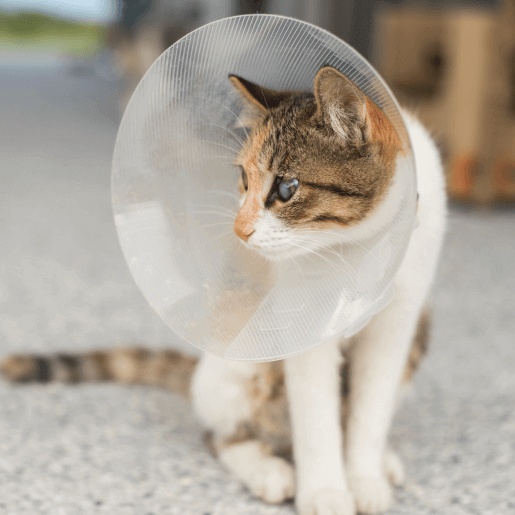
- Prevent licking or biting: We use Medical Pet Suits (MPS) to protect your pet’s surgery site while it heals, while also keeping them comfortable. An e-collar or inflatable collar can also be used to protect the incision.
- Keep the incision dry: No baths during the two-week recovery period
- Monitor pain levels: Some lethargy is normal for the first few days, but contact us if your pet appears uncomfortable
- Separate recently neutered males: They can still impregnate females for up to 30 days post-surgery
We’ll provide detailed post-operative instructions and pain medication to keep your pet comfortable throughout recovery.
To schedule a spay or neuter consultation at our Westport, CT veterinary hospital, call us at (203) 226-5555.